

Börner Quarter Göttingen
Haus Börner, the first half-timbered house of the Renaissance in Göttingen dating from 1539, is today the entrance to the Grüner Hof and the Steinernen Hof between Barfüßer Straße and Rote Straße in Göttingen’s old town.
The aim was to retain as much of the old building fabric as possible in order to preserve the character and charm of this unique ensemble, where the Börner meat factory was established in the 19th century alongside other businesses.
Prize award in the federal competition “New Life in Old Buildings”, exhibition staged by the German Architecture Museum Frankfurt/ M., 2000
The time is ripe for a new life in the city centre
The key to the city is the enthusiasm to live in it, to enjoy its advantages and, moreover, to find a diverse offer.
We have always sought challenges. We were able to realise a concept in the Rotenstrasse and Barfüßer Strasse. It took us two years completely. The work has been extremely satisfying.
Initially, we were looking for a concept and sketched out a vision. Then the practical issues took over. Once the identifiable problems were solved, deadlines had to be planned and met and bold decisions had to be made quickly. This process was not always easy, often nerve-wracking, painful, but also fulfilling.
In the architect Hansjochen Schwieger, with whom I have had a very friendly working relationship for many years, I have found a partner to whom the demolition or destruction of an old building feels like self-harm, just as it does to me.
Upheaval and change are firmly anchored in this quarter – in this neighbourhood.
Just as in times past the city constantly adapted to the needs of its inhabitants, we are earnestly striving to shape a new environment that offers exchange of information and opinions and good food.
Visitors to this quarter encounter new and old. A quarter that has its own special character. The challenge is to use this character as a basis and gradually – during the construction period and in the future – to revitalize it with something new.
As you can see, it is not absolutely necessary to create new, fashionable architecture for the overall design. The predominantly old alongside a new decorative ambience creates the special and fascinating contrast we expect.
The tension of the old and the new runs like an electric current through the whole neighbourhood.
Some recent, considerably more comprehensive examples of modern urban architecture are a good illustration of how harmoniously the old and the new blend together:
- Paris train station
- Musee d’Orsay
- Harbour storage in London
- Fleetinsel in Hamburg.
I would like to refer again to the neutral structures and the materials of the neighbourhood and their facilities. Together with the colours, they form an effective alliance. They literally blend together so that the colour does not distract but becomes part of the structure, the patterns and especially the mood of the whole.
The builder Heinz Peter Adams in June 1998
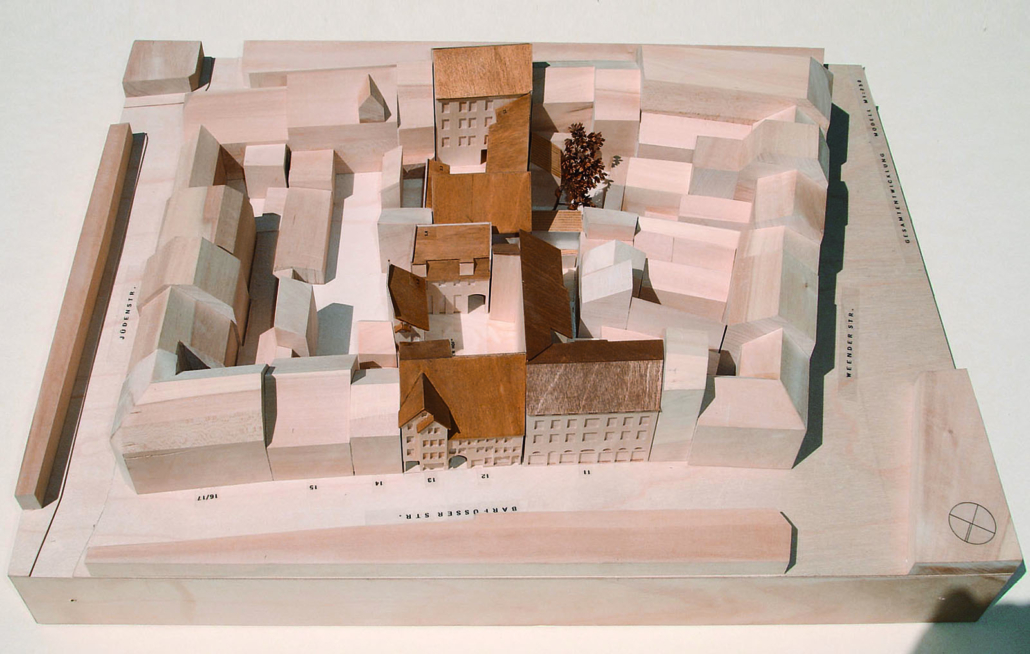
model
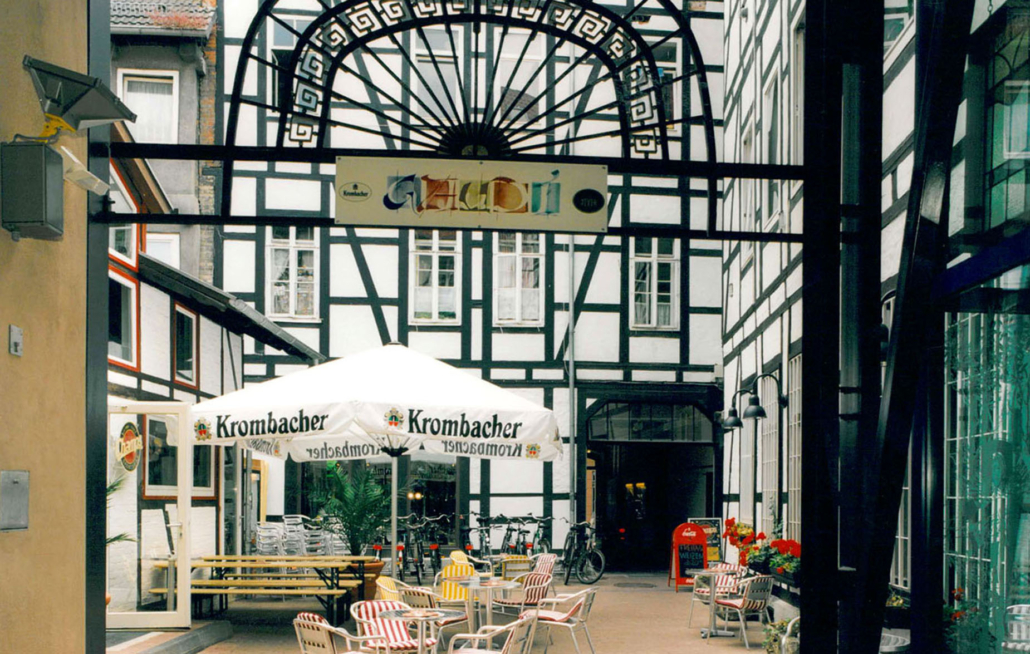
view to passage
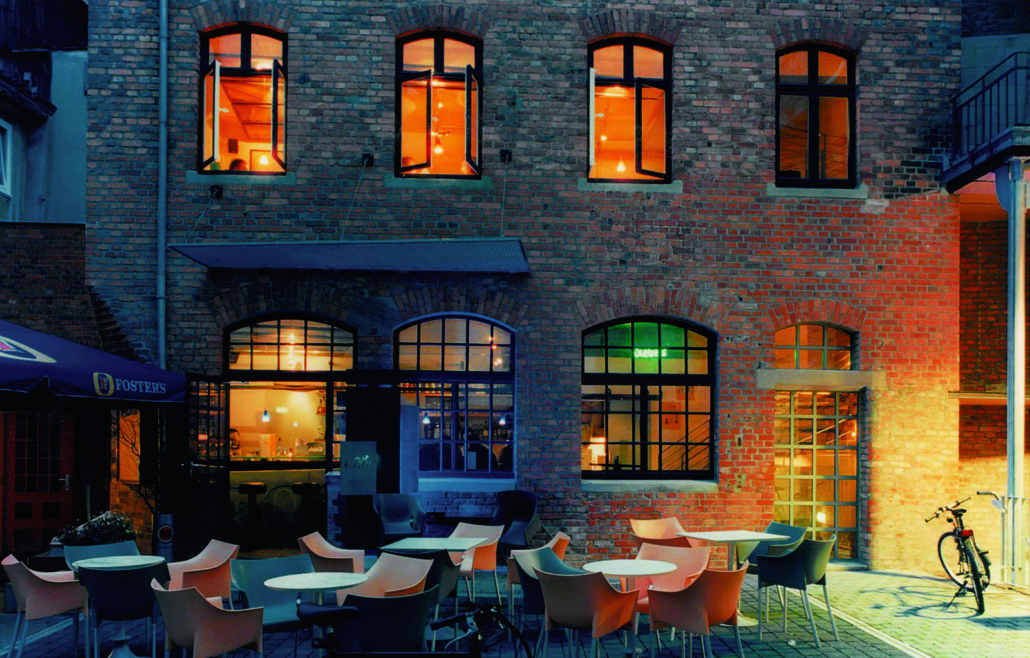
Inner Courtyard
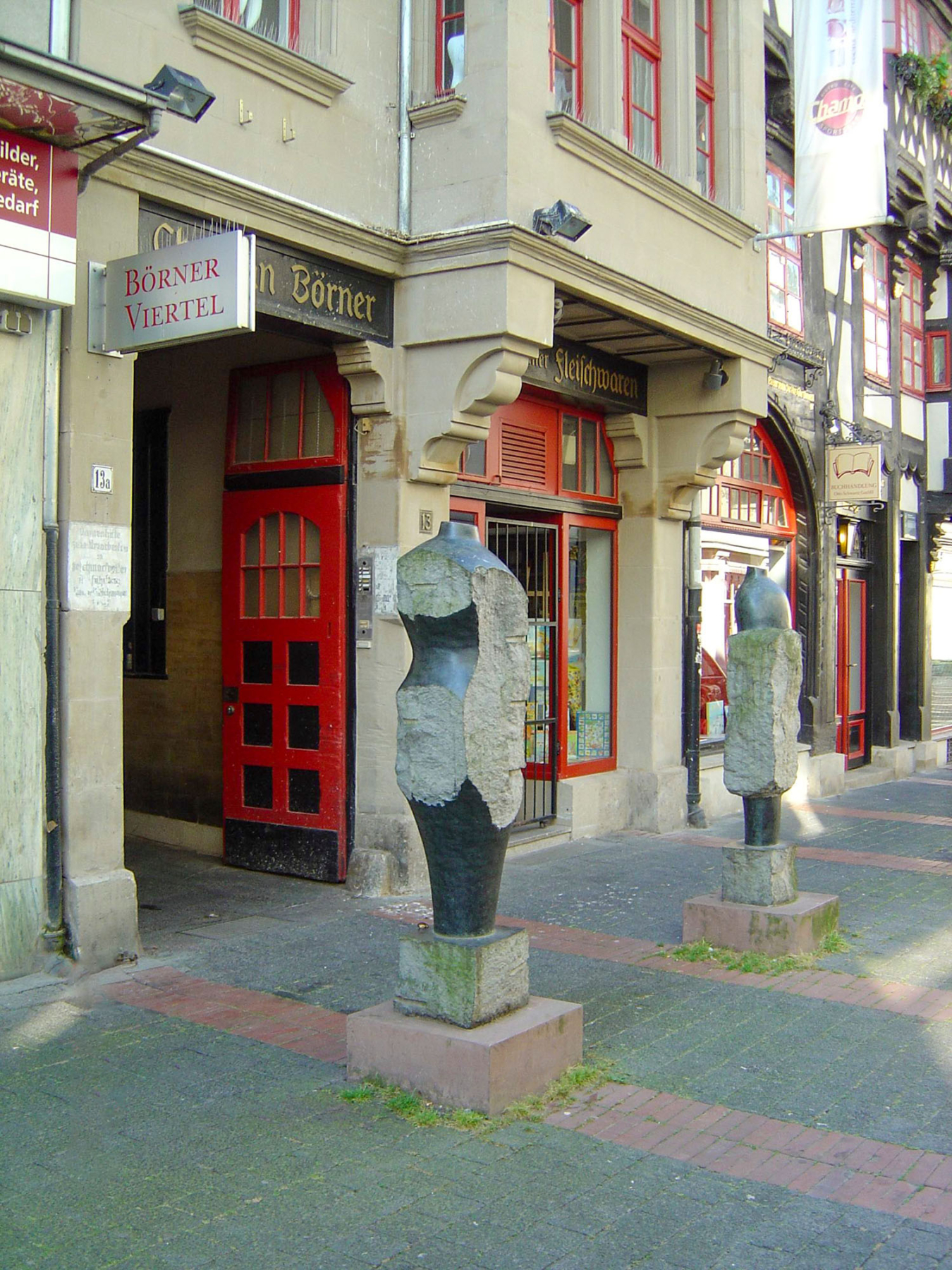
Entry
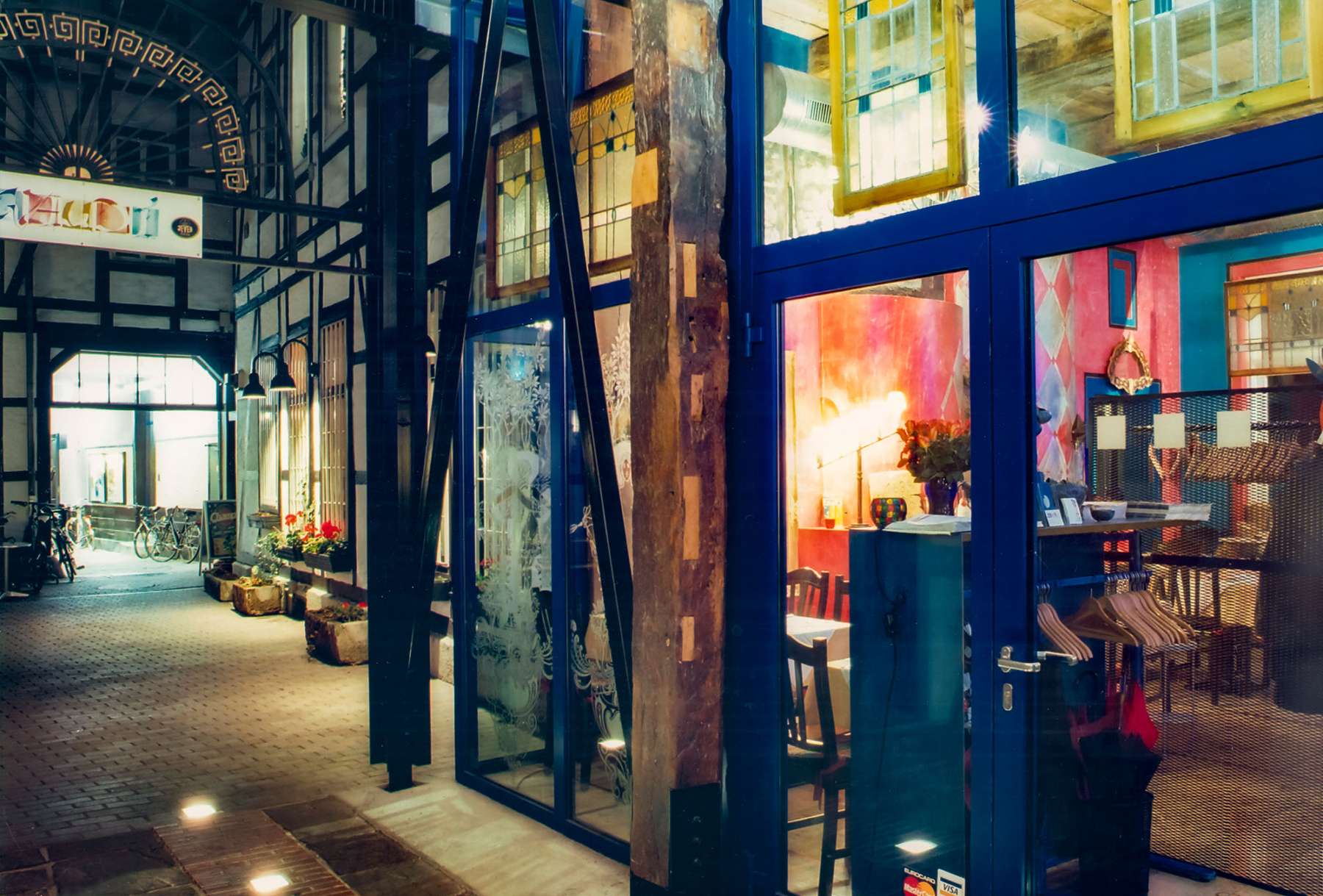
Night view
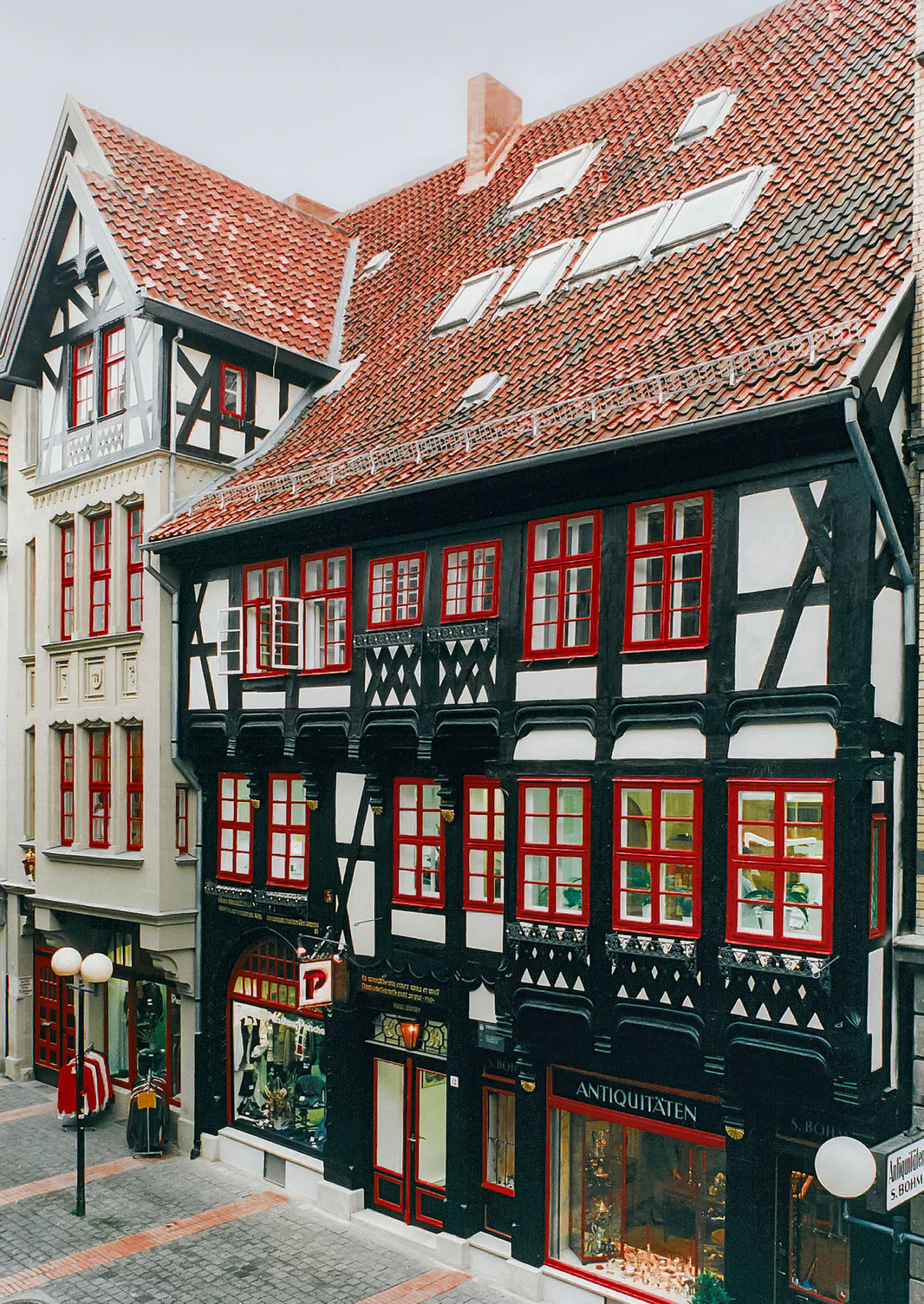
Half-timbered façade

